What Are the 8 Most Important Discoveries in Space?
Space exploration has fundamentally transformed our understanding of the universe. The eight most important discoveries include the detection of gravitational waves, confirmation of black holes, discovery of exoplanets, the expansion of the universe, the cosmic microwave background radiation, evidence of dark matter, the Big Bang theory, and the moons of Jupiter. These breakthroughs have reshaped science and inspired generations of astronomers and space enthusiasts.
Revolutionary Discoveries That Changed Everything
The first major discovery was observing gravitational waves in 2015. Scientists detected ripples in spacetime caused by colliding black holes. This confirmed Einstein's century-old prediction and opened entirely new ways to study the universe. We could now observe cosmic events through waves instead of just light.
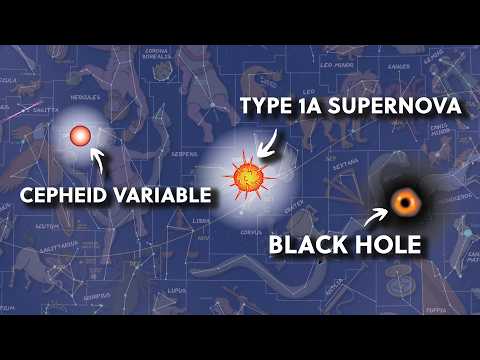
The direct imaging of a black hole in 2019 proved another watershed moment. For decades, black holes remained theoretical. The Event Horizon Telescope captured the first actual photograph of a black hole's shadow in galaxy M87. This visual proof sparked global excitement and demonstrated humanity's technological prowess in astronomy.
Exoplanet discovery revolutionized planetary science. Since 1992, astronomers have found over 5,000 planets orbiting distant stars. This discovery suggested Earth-like worlds might be common. It fueled the search for extraterrestrial life and expanded the possibilities of habitable zones beyond our solar system.
Understanding the Universe's Structure and Expansion
Edwin Hubble's discovery that the universe is expanding fundamentally changed cosmology. In the 1920s, he proved the universe wasn't static. Galaxies were moving away from each other at increasing speeds. This observation led directly to the Big Bang theory and our modern understanding of cosmic origins.
The cosmic microwave background radiation discovery in 1964 provided crucial evidence for the Big Bang. Penzias and Wilson detected faint radiation left over from the universe's earliest moments. This afterglow of creation gave scientists a window into the infant universe just 380,000 years after the Big Bang.
Dark matter and dark energy remain among the most mysterious discoveries. Scientists found that 95% of the universe consists of invisible matter and energy. Regular matter, everything we can see and touch, makes up only 5%. This discovery humbled astronomers and sparked decades of research into these hidden cosmic components.
Foundation Discoveries That Started It All
Galileo's observation of Jupiter's moons in 1610 challenged the geocentric view of the universe. He saw four moons orbiting Jupiter, not Earth. This simple observation proved that not everything orbited our planet. It supported the heliocentric model and marked the beginning of modern astronomy.
The Big Bang theory emerged from multiple discoveries working together. It explains how the universe began from an infinitely hot, dense point and expanded outward. While scientists continue refining details, the Big Bang remains our best explanation for cosmic origins.
Why These Discoveries Matter Today
These eight discoveries form the foundation of modern space science. Each breakthrough opened new questions and research directions. They've inspired technological advances that extend beyond astronomy. Satellite technology, GPS systems, and medical imaging all trace their roots to space exploration research.
Understanding these discoveries helps appreciate humanity's place in the cosmos. We've learned we're not at the universe's center. Our galaxy is one among billions. Our planet orbits a typical star. Yet despite our cosmic insignificance, we've managed to unlock profound truths about reality itself.
If you're passionate about science communication and want to share knowledge about space discoveries with others, consider joining the It's Buzzing Ambassador Program. You can earn by sharing educational content about astronomy and science topics you're excited about.
Space exploration continues advancing rapidly. Future discoveries await as new telescopes launch and technology improves. The eight discoveries discussed here represent humanity's greatest achievements in understanding the universe. They inspire us to keep asking questions and reaching for answers among the stars.